PRODUCT · 05
PolicyAI
01 /
Who it is for
Insurers and policyholders: coverage, exclusion, and process questions are asked of a model that knows only its own policy set; the answer comes from the policy itself.
Where it is used
- Policy Q&A: the model sees only the organization's own policy set, not general internet knowledge.
- Policyholder side: each person talks to their own policy, through the channel the organization chooses, without interruption.
- Broker side: records flow in automatically from the system the organization uses; search works by name, content, and date, and expiring policies are flagged.
- Local operation: the retrieval and generation steps run on the organization's own hardware.
02 /
The policyholder talks to their own policy
Channel
The policyholder writes through the communication channel the organization chooses; the channel is connected according to the organization's own preference.
The situation is described
The policyholder describes what happened in their own words and asks whether it is covered.
Answers from their own policy
The answer is generated only from that person's own policy; no other customer's document serves as a source.
Clause citation
A covered or not-covered answer is given together with the policy clause it relies on.
Handover
A matter that cannot be answered from the policy is passed to the organization's team, together with the call record.
03 /
Runs on top of the organization's own system
Records come in
Policy records flow in automatically from the system the organization uses; no change to the existing setup is required.
Search
Search by name, policy content, and date; the record you are looking for is reached in a single step.
Ask the policy
Questions are asked directly of the policy found; the answer is generated from that policy's clauses.
Deadline reminder
Policies nearing their expiry date are flagged automatically; renewal tracking no longer depends on manual follow-up.
04 /
The customer is looked up
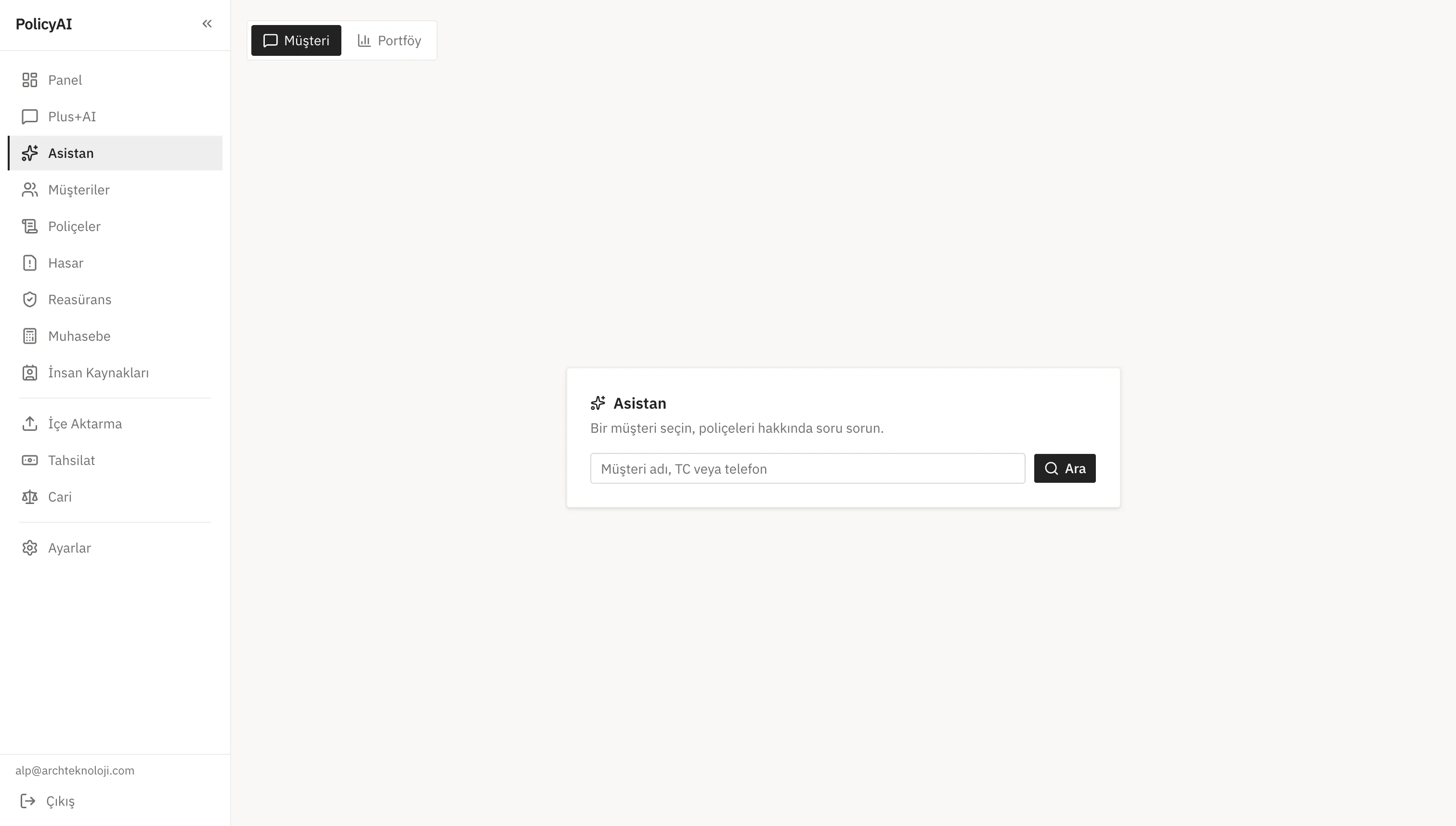
Name, national ID, or phone in a single field
The team does not have to look up policy numbers; they find the customer with the information they already know and ask their question across that customer's policies.
05 /
The policy is asked a question
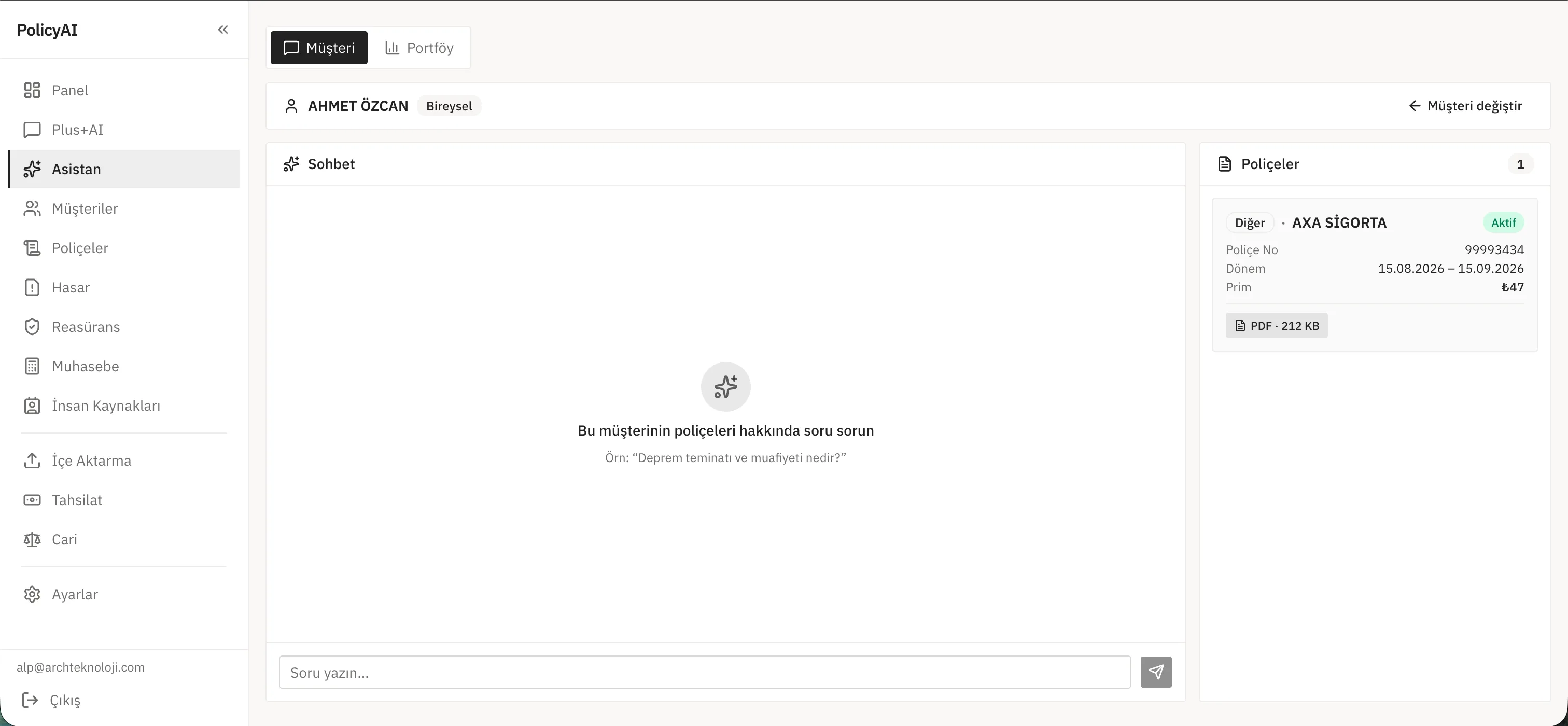
Answers only from that customer's policy
To the right of the chat sit the customer's policies: insurer, policy number, term, premium, and the policy PDF. When a question is asked, the answer relies on this set.
06 /
Questions across the entire portfolio
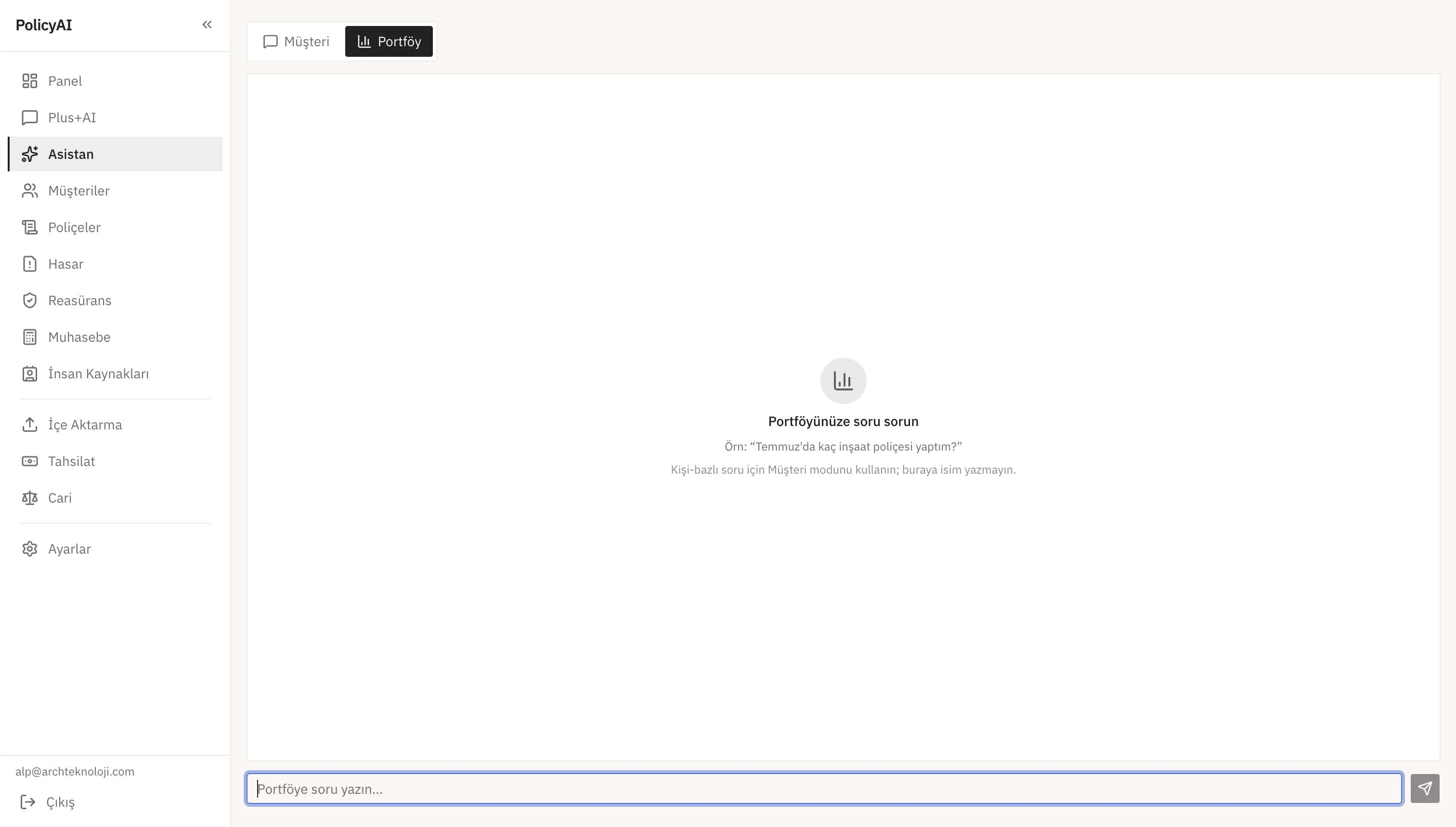
At portfolio level, not per person
The same assistant's second mode reads the entire portfolio: questions about period, line of business, and count are asked in a single sentence, and the answer comes from the organization's own records.
07 /
The customer record on one screen
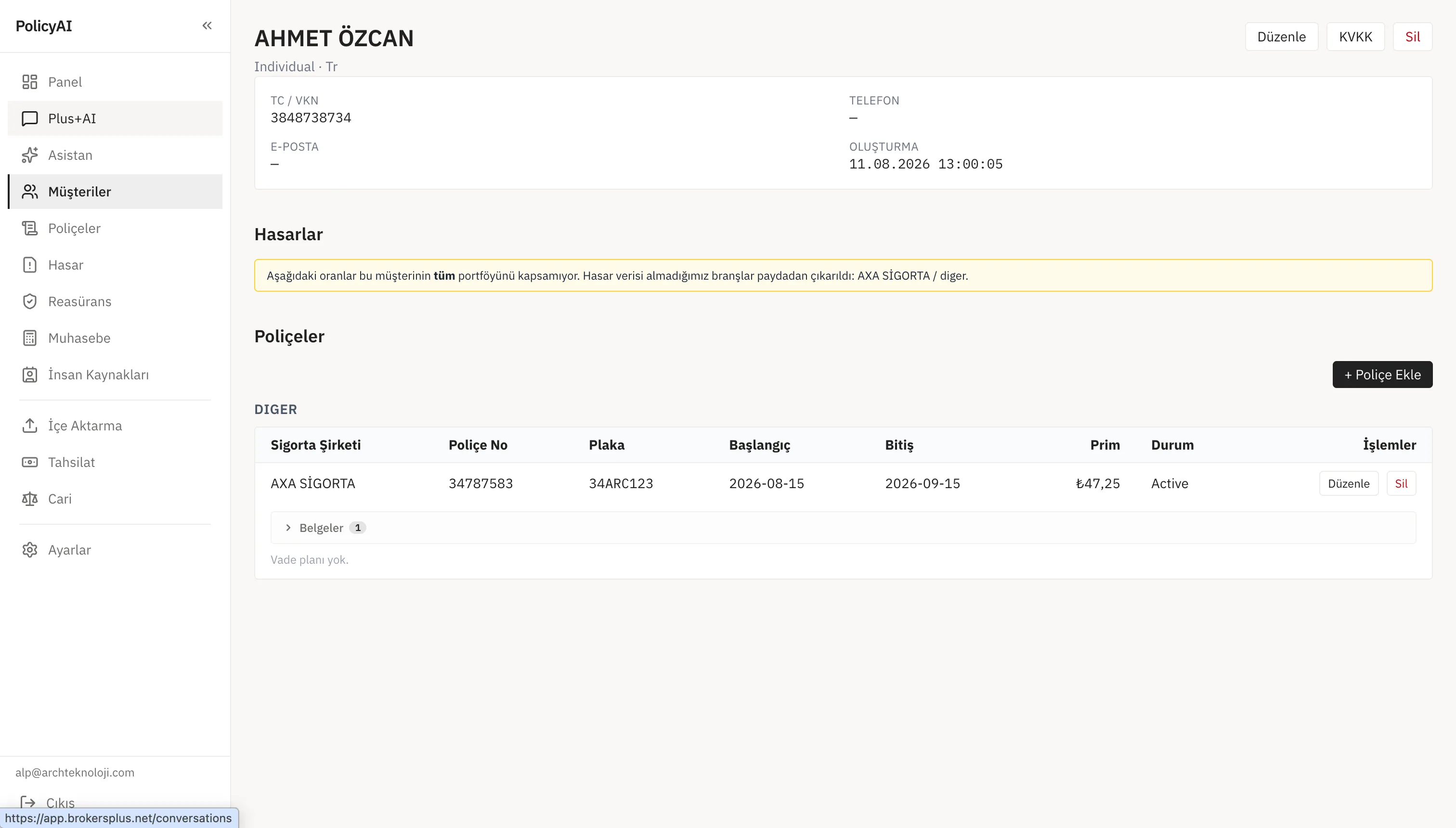
Identity · claim alert · policy table
When a record is opened, the customer's policies, installment schedule, and documents sit in one place; when the loss ratio is calculated, the screen states which lines of business were excluded from the denominator.
08 /
The collections side of the same workspace
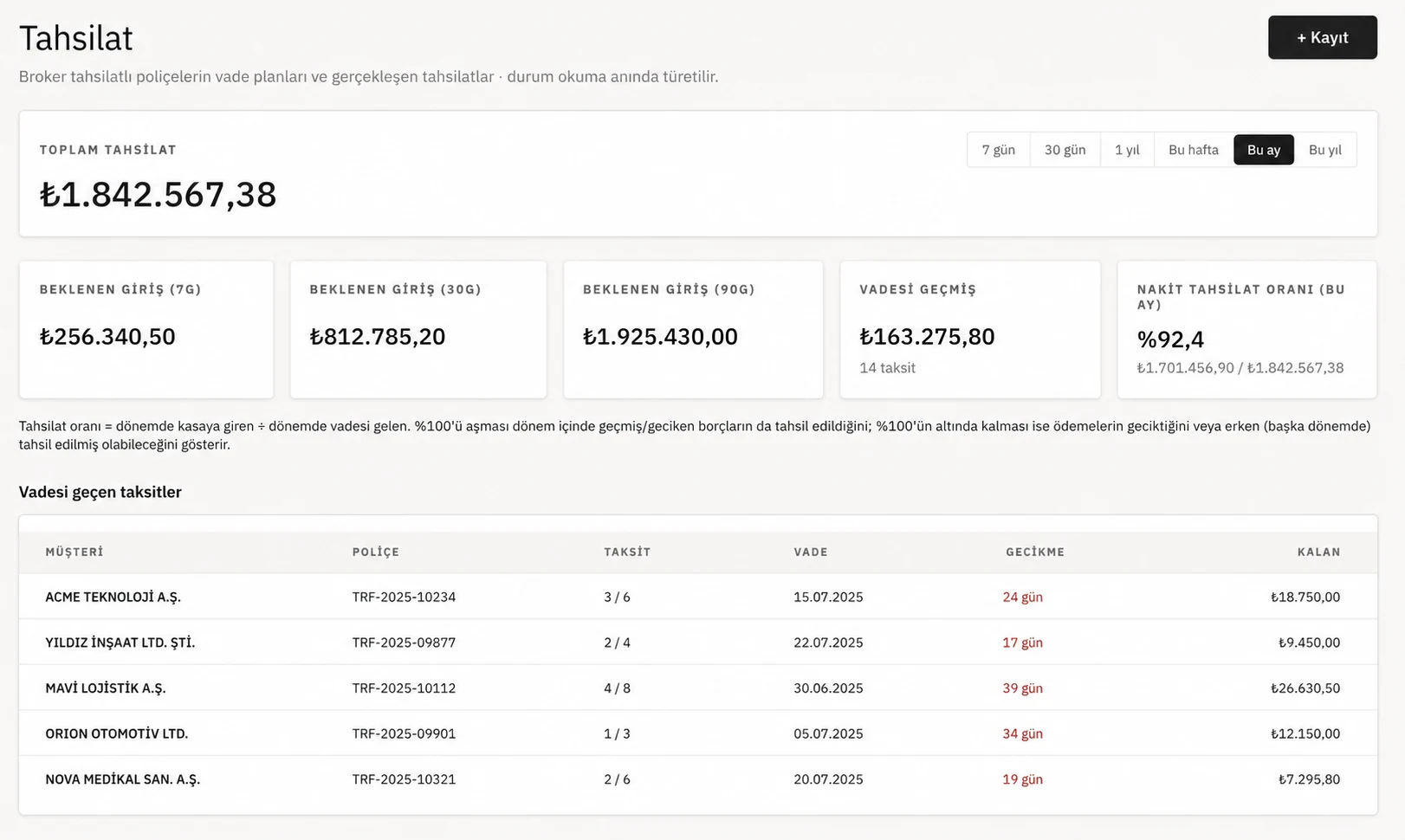
Installment schedule · cash collection rate · overdue installments
While policy queries run on top of the system the organization uses, collections run in the same workspace: expected inflow according to the installment schedule, the period's cash collection rate, and overdue installments sit on a single screen.
09 /
Two sides, one source
- Source: the organization's policy set, a single shelf.
- The policyholder asks their own policy.
- The organization's team asks the same source.
- No one sees anyone else's policy: inaccessible policies are drawn empty.
10 /
The basis of the answer
- Question: the policyholder describes the situation in their own words.
- Policy: only that person's own policy serves as the source.
- Clause: the policy clause the answer relies on is isolated.
- Answer: the coverage decision is given together with the clause it relies on.
- Handover: a matter that cannot be answered from the policy is passed to the organization's team.
11 /
Related industries

Insurance
Coverage, exclusion, and claim questions are answered from the policy itself. The internal team and the policyholder ask the same source; the policy set never leaves the organization's hardware.

Finance
Valuation requests, collections calls, and policy questions are answered with the organization's own data, on the organization's own hardware.
How does PolicyAI work in your organization?
Insurance automation that lets you talk directly to the policy.
Let's talk about your system
Tell us which process you want to automate; we will draw up an actionable plan.